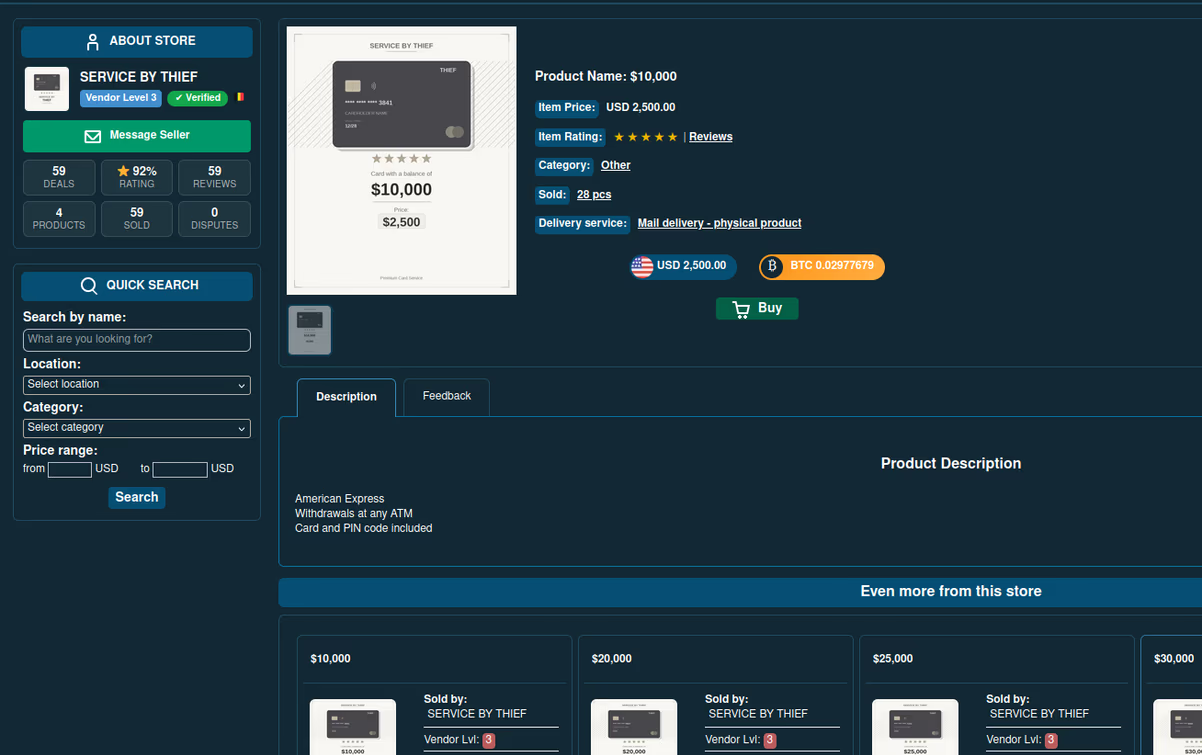
In November 2024, Mark T., a 34-year-old resident of Tampa Bay, Florida, believed he had discovered an easy path to wealth. He spent $480 in cryptocurrency to acquire six cloned debit cards, each equipped with stolen PIN codes, from a darknet marketplace. Initially, his scheme appeared successful when three ATMs dispensed a total of $4,200 in cash. However, his criminal activity came to a screeching halt at the fourth ATM, leading to a rapid series of events that culminated in a five-year federal prison sentence. This story is not just about Mark’s ill-fated attempt; it is a striking illustration of how quickly justice can catch up with those who underestimate the power of advanced surveillance and digital evidence.
Mark purchased the cloned cards from a specific darknet marketplace that remains unnamed.
The Mechanics of Carding: A Step-by-Step Breakdown
Carding involves the illicit sale and use of stolen banking information, representing a long-standing form of cybercrime. Mark’s approach was emblematic of this scheme:
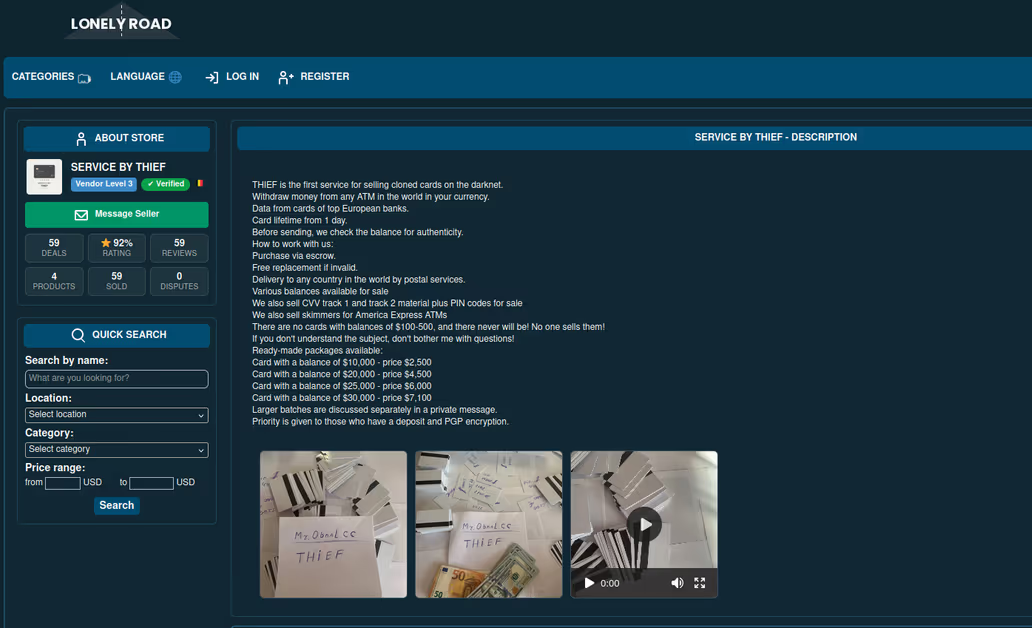
- Data Acquisition: Criminals harvest magnetic card tracks through various methods such as ATM skimmers, shimmer devices, phishing, or purchasing data from darknet markets.
- Card Production: The stolen data is embossed onto blank plastic cards, giving them the appearance of legitimate cards, complete with names, expiration dates, and card numbers.
- PIN Code Compromise: If the PIN code has been stolen using methods like overlay keypads or hidden cameras, the criminal is equipped to withdraw cash.
- Cash Withdrawal: The individual then retrieves cash from ATMs before the original account holder realizes their card has been compromised.
- Money Laundering: Finally, the illicit cash is converted into cryptocurrency, often via Bitcoin ATMs or peer-to-peer exchanges, obscuring the financial trail.
Mark purchased his cards via a marketplace we won't name, using Monero, a currency known for its privacy features. The cards were shipped in unmarked packaging, making everything seem legitimate. Yet, buyers usually overlook one critical element: an ATM is not merely a cash dispenser; it's also a sophisticated tool for collecting evidence.
The Surveillance That Brought Mark Down
Modern ATMs are equipped with advanced surveillance systems, which include:
- Built-in camera: Captures high-resolution images of customers, often even in low-light conditions.
- Hidden camera: Offers a second angle, usually not visible to the customer, enhancing the ability to capture faces and activities.
- Transaction logs: Every transaction is meticulously recorded, including time, amounts, and card numbers.
- Geolocation data: ATMs track their locations, ensuring the bank knows where each transaction occurs.
- Network logs: Document all communication with the bank's processor, adding yet another layer of tracking.
When Mark approached an ATM in a Tampa suburb, the built-in camera recorded him clearly. He withdrew $700 and left, but the 23 seconds of captured video were more than sufficient for law enforcement to identify him. "Many offenders assume that the anonymity of the darknet shields them in real life, but ATMs are where the digital crime becomes tangible, and anonymity dissipates," notes an analyst.
This reality soon shattered Mark's illusion of safety in the underworld of carding. He simply did not consider how effective the ATM’s surveillance mechanisms could be.
The Investigation Timeline: Swift Justice
The investigation unraveled rapidly:
- Day 1 (November 2024): Multiple victims across Florida, Georgia, and North Carolina report unauthorized ATM withdrawals. Their banks promptly block the cards and relay the information to a fraud warning system.
- Day 3: The bank's anti-fraud algorithms detect a pattern of withdrawals linked to cloned cards across several states in a short time frame, raising an emergency alert.
- Day 5: The bank hands the case over to the U.S. Secret Service, which has authority over financial crimes. They request transaction logs and video footage from the involved ATMs.
- Day 8: Surveillance footage from the fourth ATM reveals a clear image of Mark’s face. A comparison with the Florida Department of Public Safety database yields a match, identifying him with no prior criminal record. The analysis also shows all withdrawals occurred within a 40-mile radius of his address.
- Day 12: The investigator secures a warrant for digital traces, including web history and crypto wallet activities. Analysis reveals Mark visited Tor exit nodes around the time he made his purchase.
- Day 14: A search warrant is executed at Mark’s residence, uncovering crucial evidence: six blank cards, a magnetic stripe read/write device, a laptop showing history of darknet marketplace visits, $3,200 in cash, and packaging from his order.
- Day 15: Mark is arrested. During questioning, he admits to cashing out with four of the six cards, noting that the others were already blocked by the time he attempted to use them.
The Numbers Tell the Tale
Consider these significant facts from Mark's case:
| Parameter | Value |
|---|---|
| Total Withdrawals | 4 |
| Total Amount Withdrawn | $4,900 |
| Cost of Cards | $480 |
| Days from Withdrawal to Arrest | 15 |
| Federal Prison Sentence | 5 years (60 months) |
| Fine and Restitution | $22,000 |
| Supervised Release Duration | 3 years |
These figures showcase not only the financial repercussions of Mark’s actions but also the speed at which the justice system can respond to illicit activities in our digital age.
The Myth of Cryptocurrency Anonymity
Mark believed that paying for the cards in Monero, a cryptocurrency designed for privacy, would shield him from detection. Yet, the investigation exposed critical weaknesses:
- Centralized Exchange: Mark purchased Monero through a centralized exchange and underwent KYC verification, unwittingly linking his identity to the crypto transaction.
- Timing of Events: His timing was highly suspect. The purchase of Monero, the cards, and subsequent ATM withdrawals all occurred within two weeks, creating a circumstantial case.
- Physical Evidence: The cards confiscated during the search contained magnetic tracks corresponding with stolen data from actual victims, which is a compelling piece of evidence.
- Surveillance Footage: The video footage capturing Mark’s face at the ATM was irrefutable evidence, linking him directly to the crime scene.
Ultimately, anonymity in the crypto world is a myth when KYC regulations exist. The first and last points in the chain of transactions often provide law enforcement with enough evidence to connect the dots, regardless of how meticulously a criminal attempts to cover their tracks.
Mark's Downfall: Key Mistakes
Mark's rapid downfall stemmed from several significant missteps:
- Geographical Concentration: All withdrawals were made within a 40-mile radius of his home, instantly raising red flags with fraud detection systems.
- Lack of Disguise: He made no attempt to obscure his identity at the ATM, resulting in clear footage that law enforcement could easily analyze.
- Centralized Purchase of Cryptocurrency: Linking his identity to the Monero purchase severely compromised his anonymity.
- Storage of Evidence at Home: The presence of cloned cards and equipment in his residence provided the authorities with ample incriminating evidence.
- Cash on Hand: The $3,200 found matched the denominations dispensed by the ATMs, aligning him further with the crimes.
- Fast Withdrawals: Conducting all transactions within two weeks instead of pacing them may have helped, but eventual identification through video surveillance remained a certainty.
Mark's failures highlight vital lessons for anyone considering engaging in illicit activities.
Conclusion: A Warning from Mark's Experience
Mark T.'s case serves as a powerful reminder of the efficiency and effectiveness of modern law enforcement in the face of digital crime. His five-year sentence, along with a hefty fine and restitution, underscores the gravity of financial crimes and the realities of anonymity in the age of digital transactions. The interplay of surveillance technology, anti-fraud systems, and forensic analysis illustrates that the risks of engaging in such criminal activities far outweigh the perceived rewards.
Mark's Misguided Attempt at Quick Wealth
Mark's experiences offer crucial insights into the nature of cybercrime and its repercussions. His story is a testament to how seemingly clever schemes can result in severe penalties due to swift law enforcement responses and advanced technology. For security professionals and potential criminals alike, the lessons learned from Mark’s actions serve as a clear warning: the digital landscape is under constant surveillance, and anonymity is a fading illusion.
FAQ
What is carding?
Carding involves the use and sale of stolen banking information, typically through cloned cards for unauthorized withdrawals.
How can I protect myself from carding?
Utilizing credit card skimmer protection tools and regularly checking your transaction history are essential steps in safeguarding your financial assets.
What should I do if I suspect fraud on my account?
Immediately report unauthorized transactions to your bank, which can block your card and investigate further.
Are cryptocurrencies safe from law enforcement?
While many cryptocurrencies offer privacy, KYC regulations at exchange points can link identities to transactions, making anonymity difficult.
See also: services. We keep a short list of services we check regularly. Onion directory